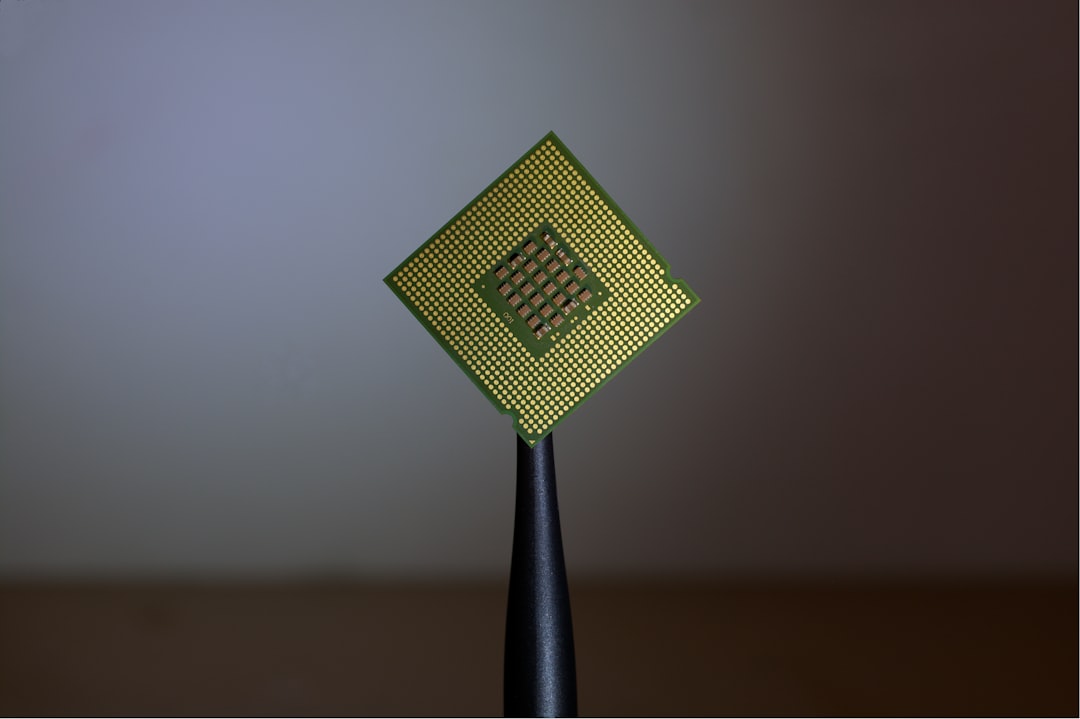
Apple M4 Pro MacBook Pro Ships With Faster Neural Engine
Apple released the MacBook Pro 14-inch and 16-inch with M4 Pro and M4 Max chips on December 18, marking the first laptops to feature the company's latest silicon generation. The M4 Pro includes up to 14 CPU cores and a 20-core GPU, with a claimed 25% performance boost over M3 Pro in CPU-bound tasks. The Neural Engine doubles to 16 cores, enabling faster on-device AI inference for features like image processing and transcription.
The M4 Max variant pushes to 12 CPU cores and 40 GPU cores. Both chips support up to 36GB unified memory and maintain the same thermal design, meaning no new cooling required. Pricing starts at $1,999 for the 14-inch base model.
Why it matters: The Neural Engine upgrade signals Apple's pivot toward local AI processing—a privacy-first approach that keeps computation off-cloud. This directly competes with Nvidia's edge AI push and positions macOS as a platform for developers building AI applications. The timing aligns with growing enterprise demand for on-device machine learning.
What's next: Expect third-party developers to optimize apps for the M4 Neural Engine by Q1 2025. Apple's developer documentation will guide adoption.
Google Launches Gemini 2.0 Flash With Multimodal Reasoning
Google released Gemini 2.0 Flash on December 19 via the Gemini API and web interface, introducing "multimodal reasoning" that processes text, images, audio, and video in a single inference pass. The model reportedly handles 1 million token context windows natively and runs 2–3x faster than Gemini 1.5 Flash while maintaining comparable accuracy on benchmarks.
New features include real-time audio understanding for live transcription and simultaneous translation, plus improved instruction-following for complex, multi-step workflows. Google positioned the release as a response to OpenAI's o1 reasoning model, emphasizing speed-to-accuracy trade-offs for developers choosing between cost and latency.
Access rolls out to API users at $0.075 per 1 million input tokens and $0.30 per 1 million output tokens. The web version (gemini.google.com) is free for all users.
Why it matters: Gemini 2.0 Flash tightens competition in the large language model space by offering faster inference without sacrificing multimodal capability. For developers, the lower latency unlocks real-time applications—live customer service, simultaneous translation, video analysis—that were previously impractical. Google's token pricing undercuts Claude 3.5 Sonnet on input cost, making it attractive for high-volume workloads.
What's next: OpenAI and Anthropic will likely respond with pricing or performance updates in January. Watch for enterprise adoption of Gemini 2.0 in customer-facing AI products.
Meta Releases Llama 3.3 Open-Source Model
Meta published Llama 3.3 on December 16, a 70-billion-parameter open-source language model available under the Llama Community License. The release targets developers who want to self-host large models without cloud vendor lock-in. Llama 3.3 improves reasoning and code generation compared to the 3.1 series, according to Meta's benchmarks on MATH and HumanEval datasets.
The model runs on consumer hardware—a single high-end GPU with 24GB VRAM can handle inference—and Meta provided quantized versions (4-bit and 8-bit) for laptops with 16GB RAM. Weights are available on Hugging Face and Meta's model hub.
Meta also released updated safety guidelines for developers deploying Llama models in production, addressing misuse risks for autonomous systems and financial applications.
Why it matters: Open-source models like Llama 3.3 democratize AI—researchers and startups can build without paying OpenAI or Google per-token fees. This shifts leverage away from cloud providers and toward the open ecosystem. The focus on reasoning and code suggests Meta is targeting developers building AI agents and developer tools, not just chatbots.
What's next: Expect fine-tuned Llama 3.3 variants from the community within weeks. Monitor Hugging Face for specialized versions optimized for legal, medical, and financial domains.
Qualcomm Snapdragon 8 Elite Gen 2 Announced for 2025 Flagships
Qualcomm unveiled the Snapdragon 8 Elite Gen 2 on December 20 for premium Android phones launching in Q1 2025. The chip features a redesigned CPU with two high-performance cores clocked at 3.6 GHz, plus six efficiency cores, and an updated Adreno GPU claiming 40% faster graphics than the original 8 Elite.
The integrated Hexagon processor (AI accelerator) now supports Qualcomm's Generative AI Engine, enabling on-device LLM inference for tasks like summarization and voice commands. The modem supports Wi-Fi 7 and 5G-Advanced standards.
Samsung, OnePlus, and Xiaomi confirmed designs using the Gen 2 variant. Pricing and exact launch dates for consumer phones remain unannounced.
Why it matters: The Snapdragon 8 Elite Gen 2 represents chipmakers' answer to Apple's Neural Engine—pushing AI computation to the device edge. For consumers, this means faster AI features without cloud dependency. For manufacturers, it's a selling point as privacy concerns around cloud AI grow.
What's next: Watch for Samsung Galaxy S25 and OnePlus 13 announcements in January featuring this chip. Benchmark comparisons with Apple M4 will shape 2025 smartphone messaging.
Why It Matters: The Week's Unifying Theme
This week's releases reflect a broader industry shift: edge AI and local processing are becoming table stakes. Apple's M4 Neural Engine, Google's faster inference, Meta's open-source model, and Qualcomm's on-device LLM support all reduce reliance on cloud APIs and centralized servers.
For end users, this means faster AI features, lower latency, and better privacy—no data sent to cloud servers for every prompt or image. For developers, it's a competitive pressure: building AI features now requires understanding both cloud and edge deployment.
For enterprises, the implications are strategic. Companies can now choose between cloud AI (cheaper per-token, latest models) and edge AI (faster, private, offline-capable). This fracturing of the market creates both opportunity and complexity—teams must evaluate trade-offs for each use case.
The timing also matters: all four releases land weeks before CES 2025 (January 7–10), where manufacturers will showcase devices powered by these chips and models. Expect aggressive marketing around AI speed and privacy at the show.
What to Watch Next
January 2025: CES announcements from Samsung, LG, and Chinese OEMs will showcase Snapdragon 8 Elite Gen 2 devices. Apple may preview AI features using M4 Neural Engine. Expect pricing and availability details for Gemini 2.0 API tiers.
February–March: Enterprise AI adoption will accelerate as teams evaluate whether to migrate workloads from OpenAI and Anthropic APIs to open-source Llama 3.3 or Gemini 2.0 Flash. Cost and latency benchmarks will drive decisions.
Q2 2025: The first wave of Llama 3.3 fine-tuned models will mature. Watch for specialized versions in healthcare, legal, and financial domains.
The best new tech releases this week underscore a market in transition: from centralized cloud AI to distributed, on-device intelligence. For readers tracking where AI goes next, these four launches are the signposts.